What Roof Flashing Does and Why It Leaks
The metal at your chimney, walls and valleys, and why leaks start there
(251) 850-0060
Free, no-obligation estimates. Open Monday to Sunday.
Roof Flashing Defined
Roof flashing is the metal at the chimney, the valleys, the skylights, the vent pipes and the walls that turns water away from the joints in a roof.
Shingles and tile shed water well across an open slope. Wherever the roof stops, turns or gets cut through, it needs a piece of metal to carry the water past the joint, and that metal is "flashing". Most people call it the metal around the chimney, or just roof metal.
Every one of those joints is a seam water can find, which is why the flashing is the first place we look when a roof leaks.
Kinds of Flashing
Flashing on a house includes step flashing, counterflashing, valley metal, drip edge, pipe boots and chimney shrouds, each shaped for one joint in the roof:
-
Where the roof meets a wall
Step flashing
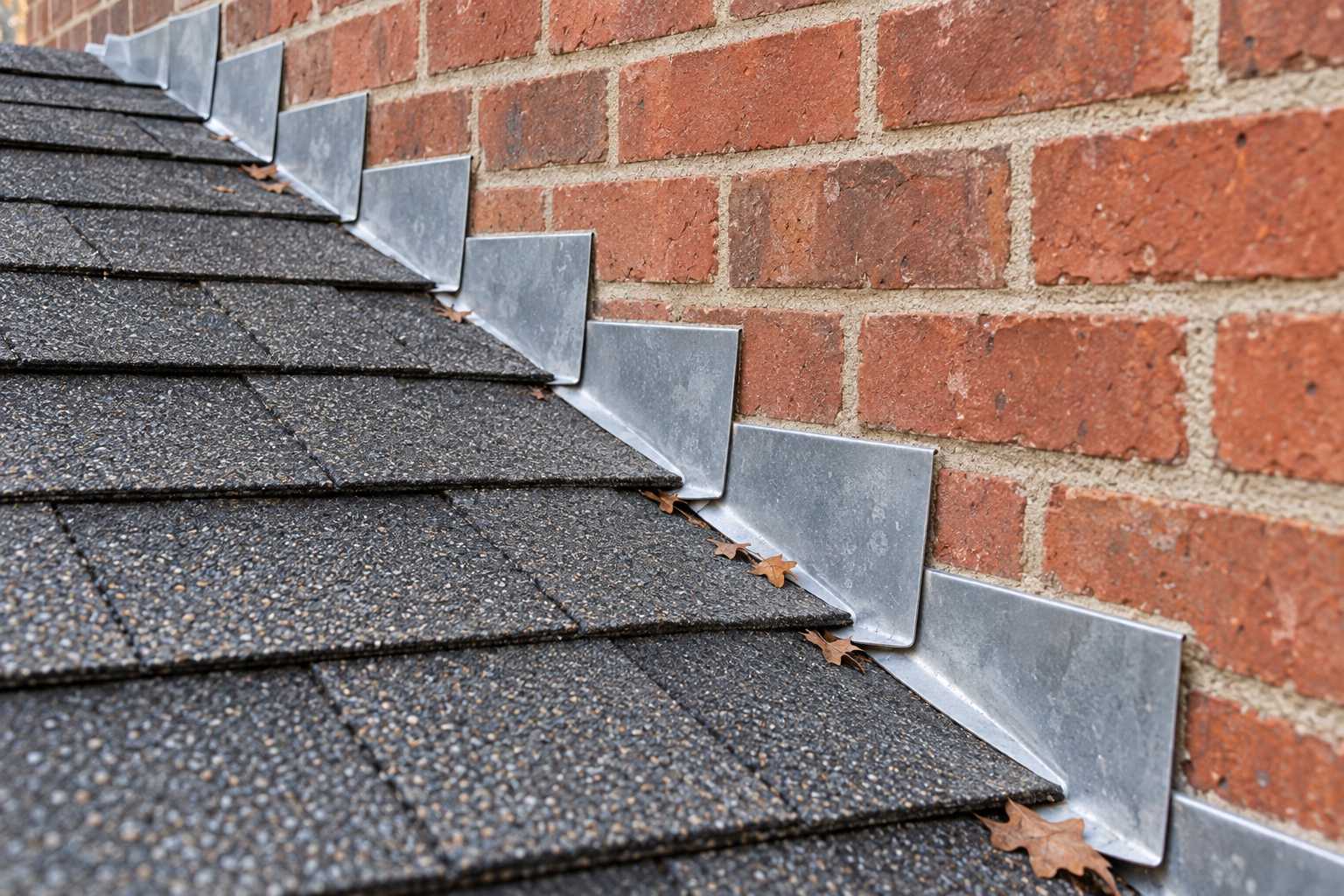
Bent pieces set in with each shingle course where a slope runs up against a wall.
(251) 850-0060 -
Over the step flashing
Counterflashing
The cap flashing let into the wall or chimney that laps down over the step flashing.
(251) 850-0060 -
Where two slopes meet
Valley metal
The metal lining the channel between two slopes, where the most water runs.
(251) 850-0060 -
Along the eaves and rakes
Drip edge
The roof edge metal, best hemmed and set on a continuous cleat.
(251) 850-0060 -
Around the vent pipes
Pipe boots
The rubber collar around a vent pipe, which splits long before the roof wears out.
(251) 850-0060 -
At the chimney
Chimney flashing and cricket
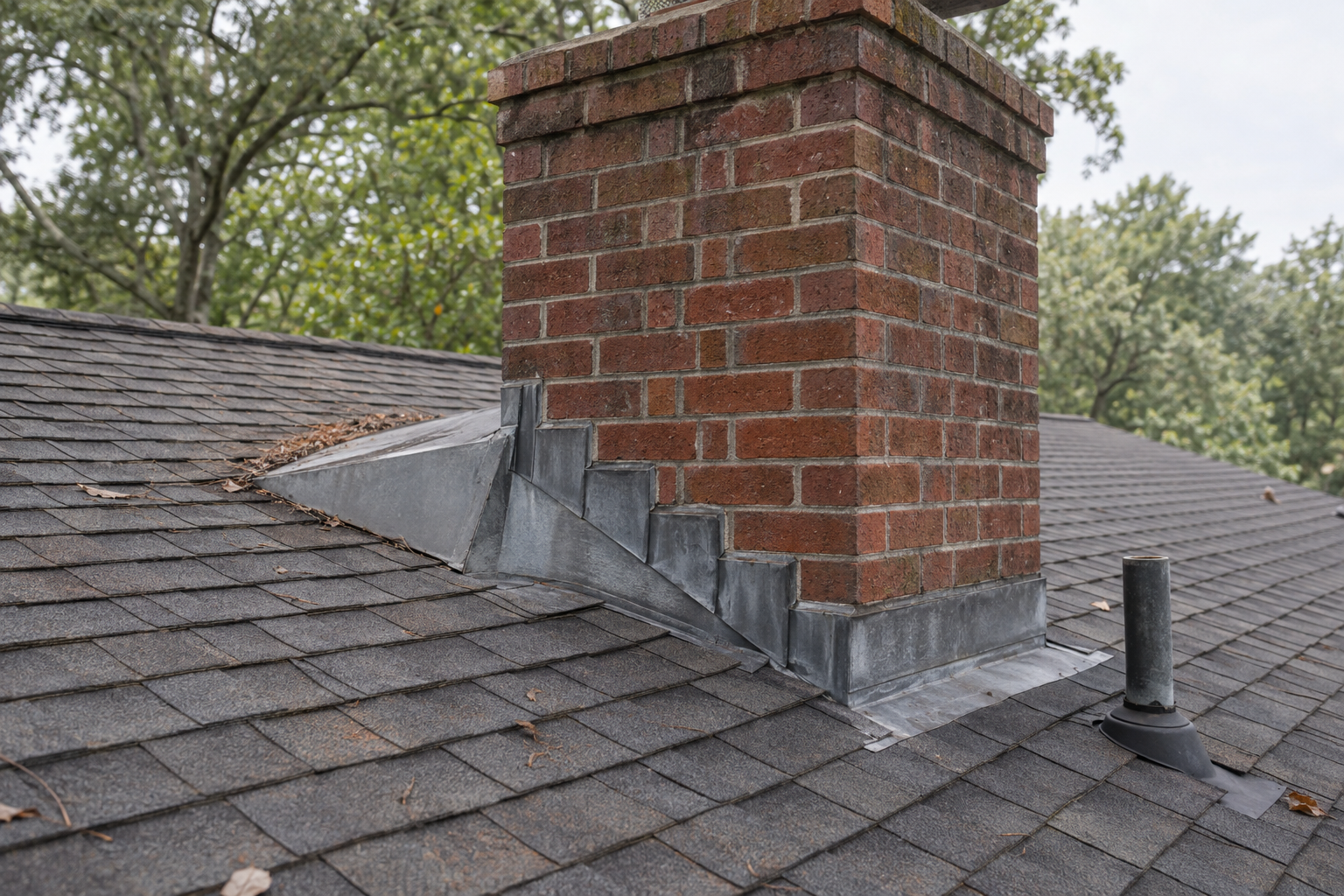
A shroud of metal around the chimney, and a "cricket", the small peak behind it, kept clear so water sheds around.
(251) 850-0060
Why Flashing Fails
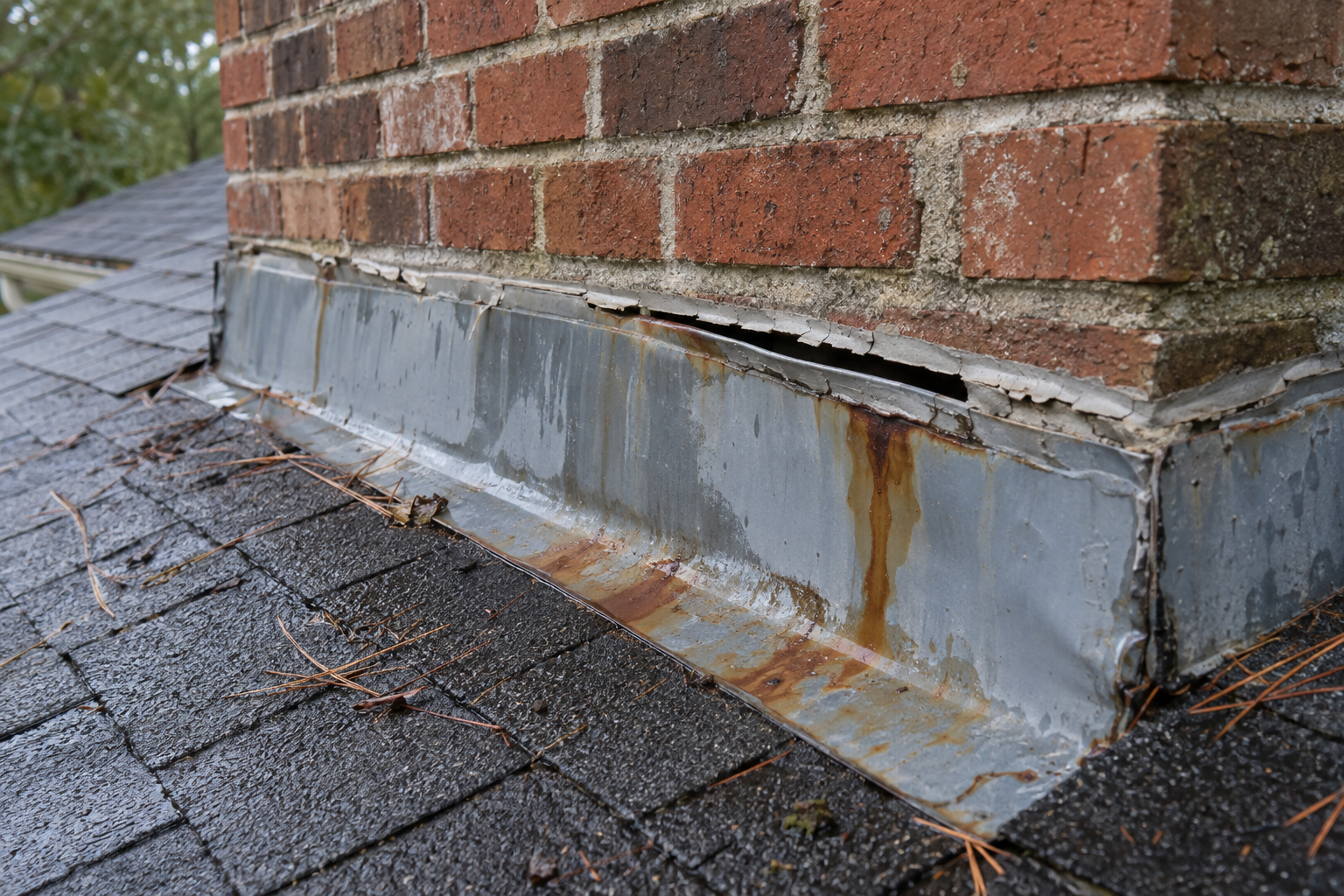
Flashing leaks when its seal opens, when the metal corrodes or when a pipe boot splits, and a seal that has opened rarely seals itself back reliably.
On a roof, those three failures look like this:
- The seal opens. The edge where the metal meets the wall, the chimney or the shingles comes loose, and water runs in behind it.
- The metal corrodes. Rusted or pitted metal opens holes that no seal along its edge can cover.
- The boot splits. The "pipe boot", the rubber collar around a vent pipe, cracks at the collar and lets water down the pipe.
That is why caulk over an opened seam is a stopgap: a sealant bond that has opened once rarely reseals reliably. A broken seal or a few displaced tabs is a small course-level fix. A failed boot, a bad valley or open "counterflashing" is a larger detail rebuild.
Repairing a Flashing Leak
A flashing leak is repaired by rebuilding the detail that failed, not by caulking over it, and that starts with finding where the water really got in.
-
We find where the water entered.
The stain often shows up several feet from where the water got in, so tracing it back is the core of the repair.
-
We check the details in order.
After the roof edges come the pipe boots, then the step flashing at the walls, then the valley metal, then the hip and ridge cap.
-
We rebuild the detail that failed.
A split boot, a bad valley or open counterflashing comes apart and goes back together, instead of a new bead of caulk over the old seam.
-
We quote the whole job before we start.
The estimate is free, and the price is in writing before any work, with no surprise charges after.
-
We show up when we say we will.
The day we set for your roof is the day we are on it.
-
We clean up when the work is done.
Old metal, cut shingles and nails leave with us, off your roof and out of your yard.
Leak Repair at the Flashing
Our roof leak repair page walks through how we trace a leak back to the failed detail and rebuild it, from the stain on your ceiling to the last piece of metal.
A stain by the chimney? Call us
Tell us where the water shows up. We come out, find the flashing that failed and put the whole job in writing before any work starts.
Open Monday to Sunday. Calls outside our hours go to voicemail and we return them the next working morning.
We answer the phone or call back the same working day. And we clean up when the work is done.