How a Roof Insurance Claim Works and What It Covers
Your insurer decides the claim. We give it the photos and the written report
(251) 850-0060
Open Monday to Sunday. Free, no-obligation estimates.
What Insurance Usually Covers
Insurance usually covers roof damage from storms or sudden events, not normal wear.
Usually yes when wind, hail or a falling limb did it all at once. Usually no when the roof simply got old.
That line is the whole claim in miniature. A policy is written for the thing that happened to the roof, not for the roof running out of years, so the first question an insurer asks is what caused the damage and when.
That is also the first thing we look at when we get on the roof: what the storm did, and what was already there before it came through.
Wear and Age Are Not Covered
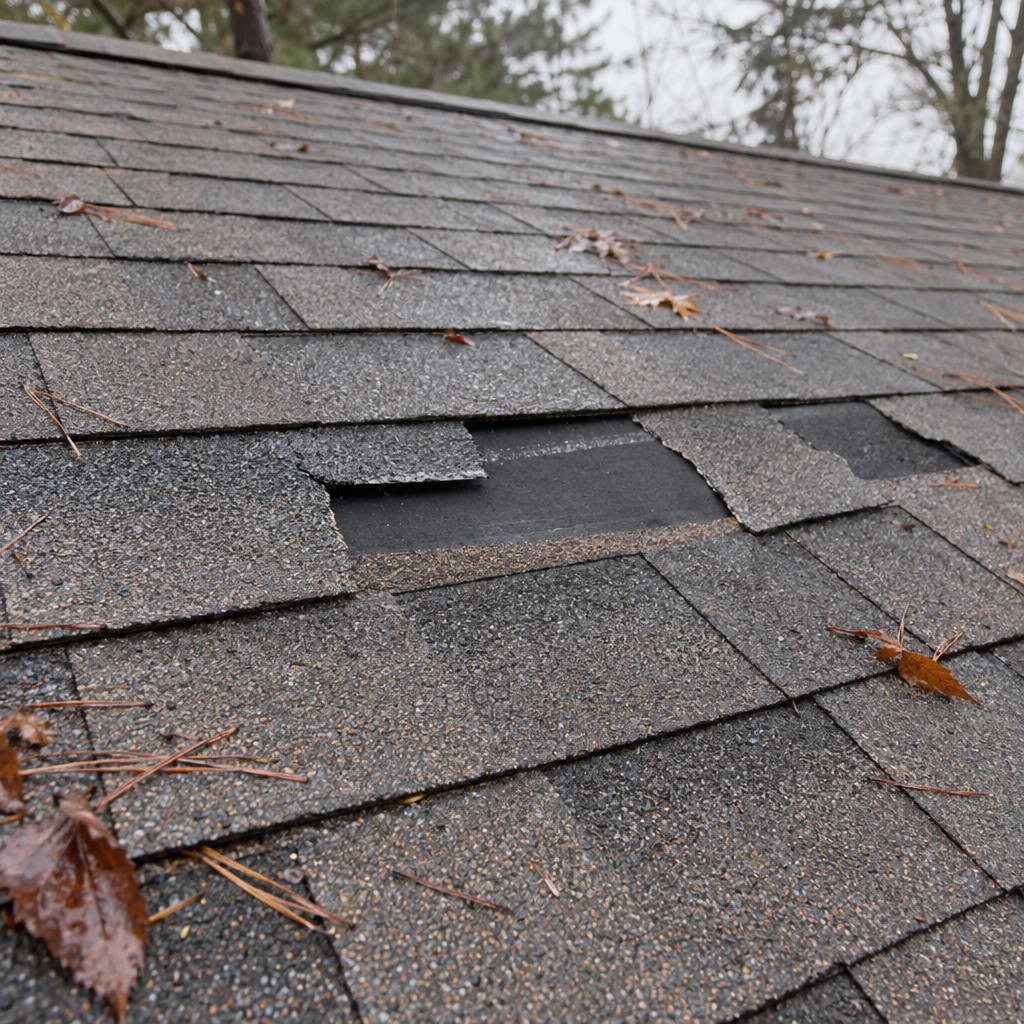
Damage caused by age or ordinary wear and tear can go uncovered, and often does, even when it leaks just as badly as storm damage.
-
Usually covered
Storm or sudden damage
- Shingles lifted or torn off by wind
- Hail hits that bruise or crack shingles
- A limb that comes down in a storm
- "Flashing" bent or pulled loose in one event
-
Often not covered
Age and ordinary wear
- Shingles worn out with the years
- "Granule loss" and bald spots
- A "pipe boot" split at the collar
- A slow leak that built up over time
The Insurer Decides
The insurer, not the roofer, decides coverage, approval and payment.
No roofer can promise you a claim will be paid, and you should be wary of one who does. What we can do is show the insurer exactly what is on the roof, in photos and in writing, so the decision rests on the roof and not on a guess from the driveway.
Your insurer decides
Whether the damage is covered, whether the claim is approved, and what it pays.
We provide
Photos of the damage, a written report of what we found, and the repair itself.
If you have a question about how a claim is being handled, the Alabama Department of Insurance is the state's insurance regulator, where policyholders find consumer help on homeowners insurance.
Documentation a Claim Needs
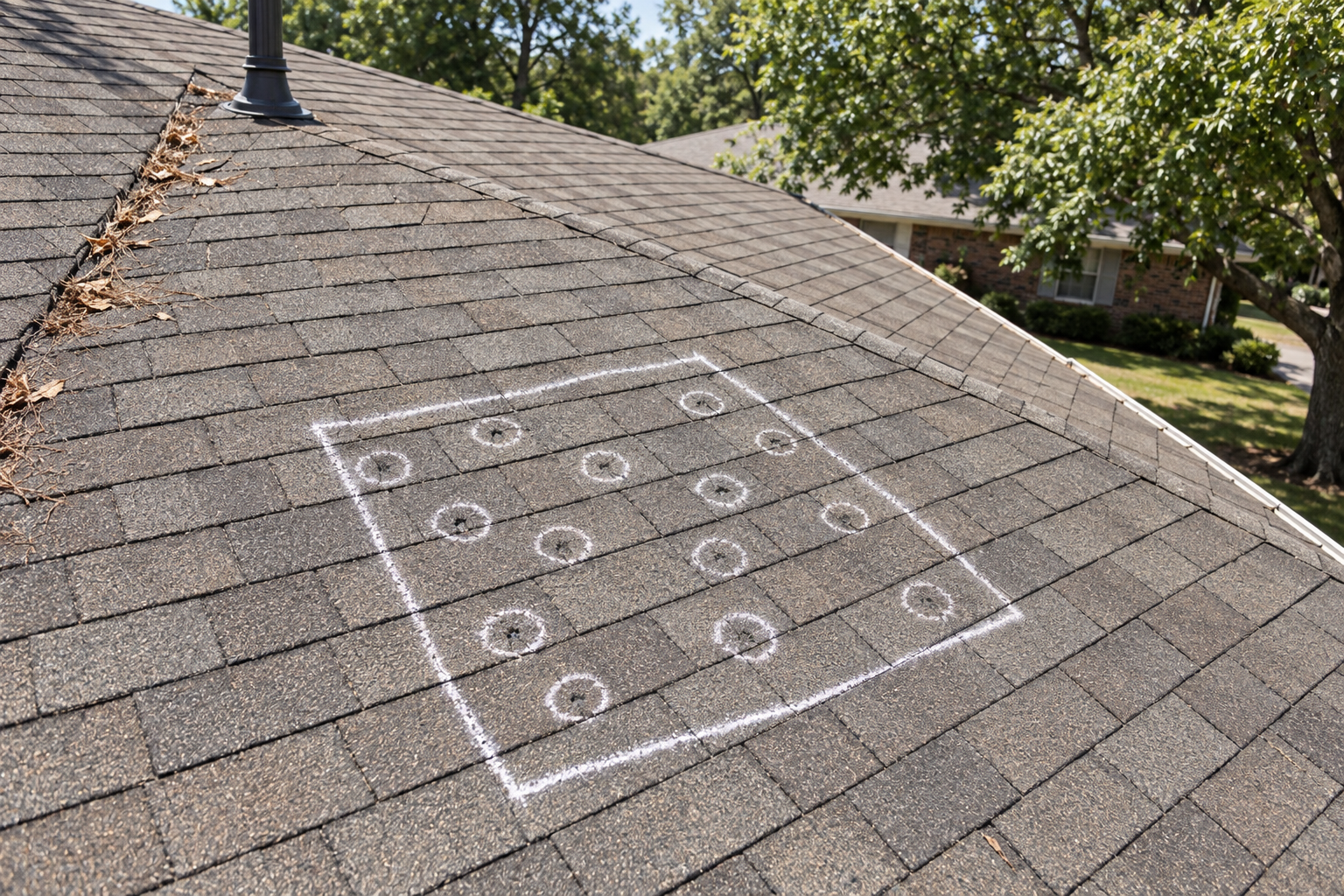
A claim needs photos and a written report that separate storm damage from wear that was there before.
An insurance report should draw that line clearly, because it is the line the claim turns on. Good repairs are photographed before and after, with the hidden layers documented while they are open.
These are the records a roof claim should have:
- Dated photos of the damage. Wide shots of each slope and close-ups of every damaged spot, taken soon after the storm.
- A written report from the roofer. What was found on the roof, where it is, and what it takes to repair it.
- A note separating storm damage from wear. Which damage the storm caused and which was already there, set down plainly.
- Receipts for temporary repairs. If the roof needed "tarping" to stop the water, keep the receipt with the rest of the claim.
FORTIFIED Roofs and Strengthen Alabama Homes
Strengthen Alabama Homes is an Alabama Department of Insurance program that offers grants, when funds are available, toward roofs built to the IBHS FORTIFIED standard, which is designed to reduce hurricane and windstorm damage.
-
Run by the state.
The program belongs to the state's insurance department, and Strengthen Alabama Homes keeps its current details.
-
Grants when funds are available.
Whether a grant is open right now is a question for the program itself, so check before you plan around one.
-
Built to the FORTIFIED standard.
The FORTIFIED Home (IBHS) standard is for roofs built to resist high wind and wind-driven rain.
-
A stronger roof, not a claim.
A grant goes toward making a roof stand up to the next storm, not toward paying for damage the last one did.
After the Claim
Once the insurer decides, we scope and schedule the repair like any other job.
The claim decision and the repair are two separate things. Whatever the insurer pays, the repair still starts with what the roof needs, priced in writing before any work begins, and you decide whether we go ahead.
The repair runs on the same terms as every job we do:
- Free, no-obligation estimates.
- The whole job quoted before we start, with no surprise charges after.
- We show up when we say we will.
- We clean up when the work is done.
Storm on the roof? Call and we'll look
We get on the roof, photograph what the storm did and what was already there, and put the repair in writing before any work starts.
Monday to Sunday, morning to evening. Calls outside those hours go to voicemail and we return them the next working morning.
We answer the phone or call back the same working day. The estimate is free and ties you to nothing, and the whole job is quoted before we start.